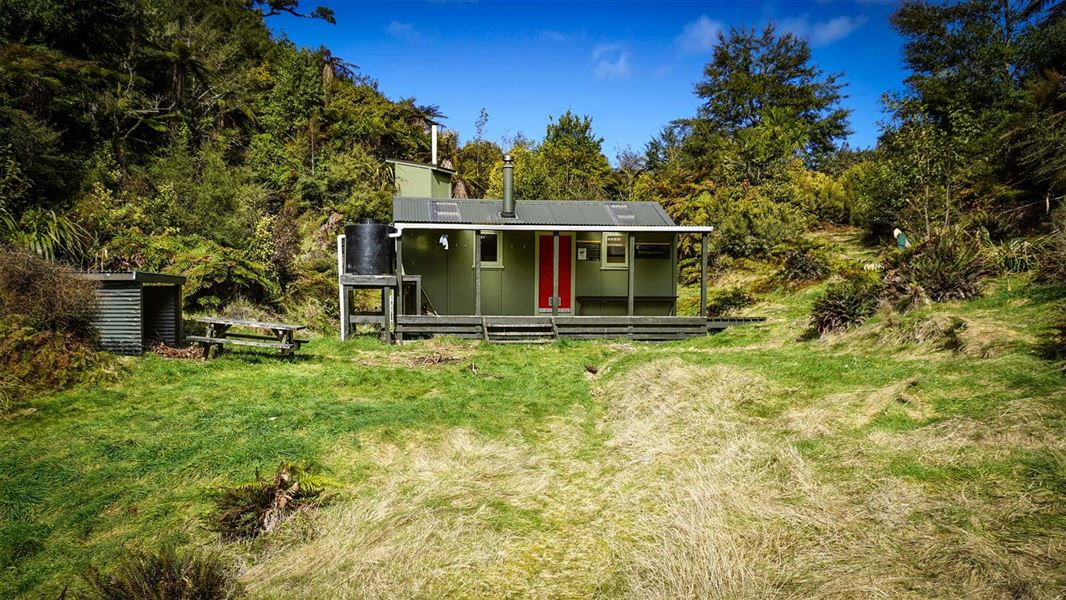
Situated in the heart of the Whirinaki Forest Te Pua-a-Tāne, amongst magnificent podocarp forest, this hut makes for a stay pleasant. Enjoy a fantastic view over the valley and rising mist above the forest.
The hut contains nine bunks, a wood burning stove and a sink with running water outside at the end of the deck.
Mangamate Hut is a great place to spend the night with plenty of birdlife on hand to keep you entertained. At night, glow worms can be spotted in the bank along the track leading to Mangamate Hut. A large grassy clearing at the forks marks the former location of the hut.
Fees
- Adult (18+ years): $15 per night
- Youth (5–17 years): $7.50 per night
- Child/Infant (0–4 years): free
Before you go, buy a hut ticket online for each night's stay. You can print or display the digital ticket on your device, or write down the ticket and confirmation numbers to take with you. You can also buy a Backcountry Hut Pass that allows you to stay at non-bookable DOC huts for a 12 month period.
The main route to the Mangamate Hut is from the River Road car park. After an hour from the car park, your reach a footbridge crossing the Mangamate Stream. Cross the bridge, turn left and follow the Mangamate stream upstream to a clearing. The track is in and out of the stream – expect 60+ stream crossings.
From the clearing, follow the track markers up the creek. The track climbs up to a benched track that leads all the way up to the hut which is situated high up near the saddle.
Alternatively the hut can be reached as part of the 3 day Mangamate Loop Track.
Tracks to this hut
-
Duration: 3 days Difficulty: Intermediate, Advanced
Location
NZTopo50 map sheet: BG38
Grid/NZTM2000 coordinates: E1920570, N5703851
Trampers should take care to avoid the ongaonga (stinging nettle).
DOC Customer Service Centre
| Phone: | 0800 275 362 |
| Email: | easternbop@doc.govt.nz |
| Address: | Whakatāne Office |